
It's time to break up with food.
The old relationship, anyway. Not the food.
The quiz told you who food is in your life. This is the part underneath it. Tap what you recognise in three quick steps, and you'll get your own Mirror at the end.
This is for you whether you're on or off a GLP-1, have had bariatric surgery, or have spent your life dieting. Medication, surgery and diets work on the outside. The Mirror looks at what's going on inside.
Who food is in your life.
Food picks up jobs over the years that have nothing to do with hunger. The six food relationship styles are playful names for those jobs.
These are descriptions of patterns, not fixed identities.
What the pattern is looking for.
The way you relate to food often echoes the way you go looking for comfort, closeness and space everywhere else.
Food as the one who's always there
Food feels reliable. It never lets you down and it's hard to stop thinking about. What you're really after is reassurance, or some certainty in a day that had none.
Food as a way to switch off
This one is less about wanting food and more about not having to feel something. Food keeps things private and lets you check out for a while.
Food as the one you keep going back to
Strict rules, the fresh start, the reward, the rebellion. You chase it, you push it away, and a few days later you're chasing it again.
Food as one good thing among many
Food is enjoyable and satisfying, and you still have it for pleasure. It just isn't the only way you get comfort, a break or a reward any more.
This is a mirror, not an attachment style test. Hunger, stress, habits, medication, health, culture and what's in the cupboard all shape eating too.
What's happening underneath.
We are a sum of parts. When you eat without physical hunger, a younger part of you has stepped forward with a need, and food is how it knows to ask. The food isn't the problem. It's the hand going up.
If you don't feel safe in your system, your child parts will run the show.
What I see, over and over, is a woman who starts out wound up. Then she eats, and the eating moves her, out of wound up and into flat. That's why it keeps happening. It works.
The anxious pathway
The freeze pathway
So where is safe?
Busy and distracted isn't safe, that's anxious. In a bubble eating and scrolling is most likely freeze. Safe is neither of those, and most of us have to learn what it feels like. It's a skill nobody taught you, not a test you're failing.
Your food relationship style and your saboteurs don't line up one to one. The saboteurs are a way to reflect, not a diagnosis.
Two steps. Regulate, then Rewire.
Regulate
Teach your body what safe feels like, so your adult can get back in the room before the urge takes over.
Rewire
Give that part of you other ways to get what it needs, so food can go back to being food.
Georgie will teach you this exact tool for your pattern in the Break Up Session (click here for more).
Here's what you're seeing.
Every one of those parts has been doing its best for you, and not one of them is the enemy. If you'd like help seeing the whole picture, bring this Mirror to a Break Up Session.
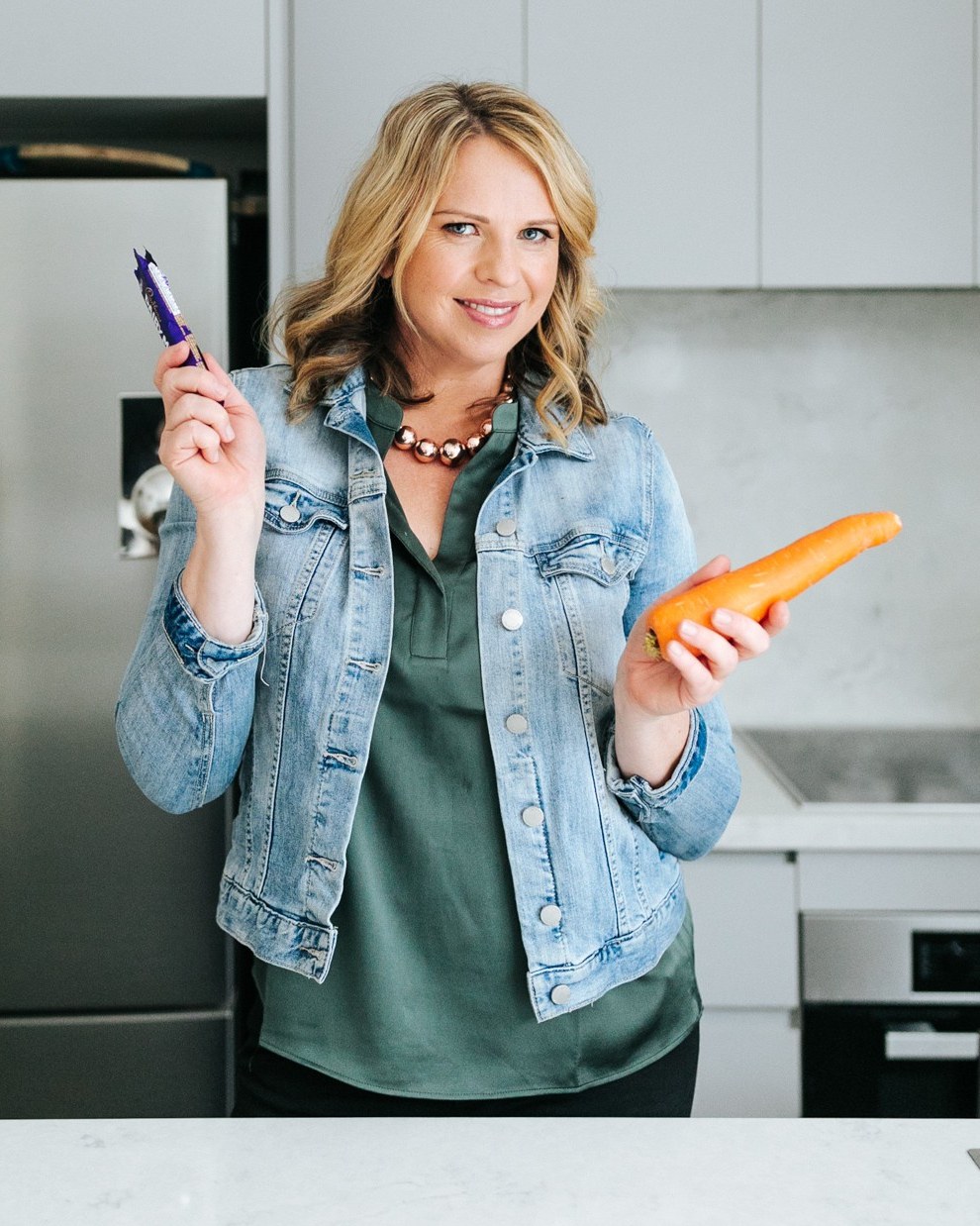
Book a Break Up Session with Georgie.
The Mirror shows you the shape of it. A Break Up Session is about you. In 30 minutes online we look at your exact patterns, which saboteurs are doing the heavy lifting, and what's underneath them. You leave with your personalised Eating Patterns Plan and your own Break Up Script, made with my Brain Rewiring Tool.
$397 AUD$297 + GST approx. US$195 / £150
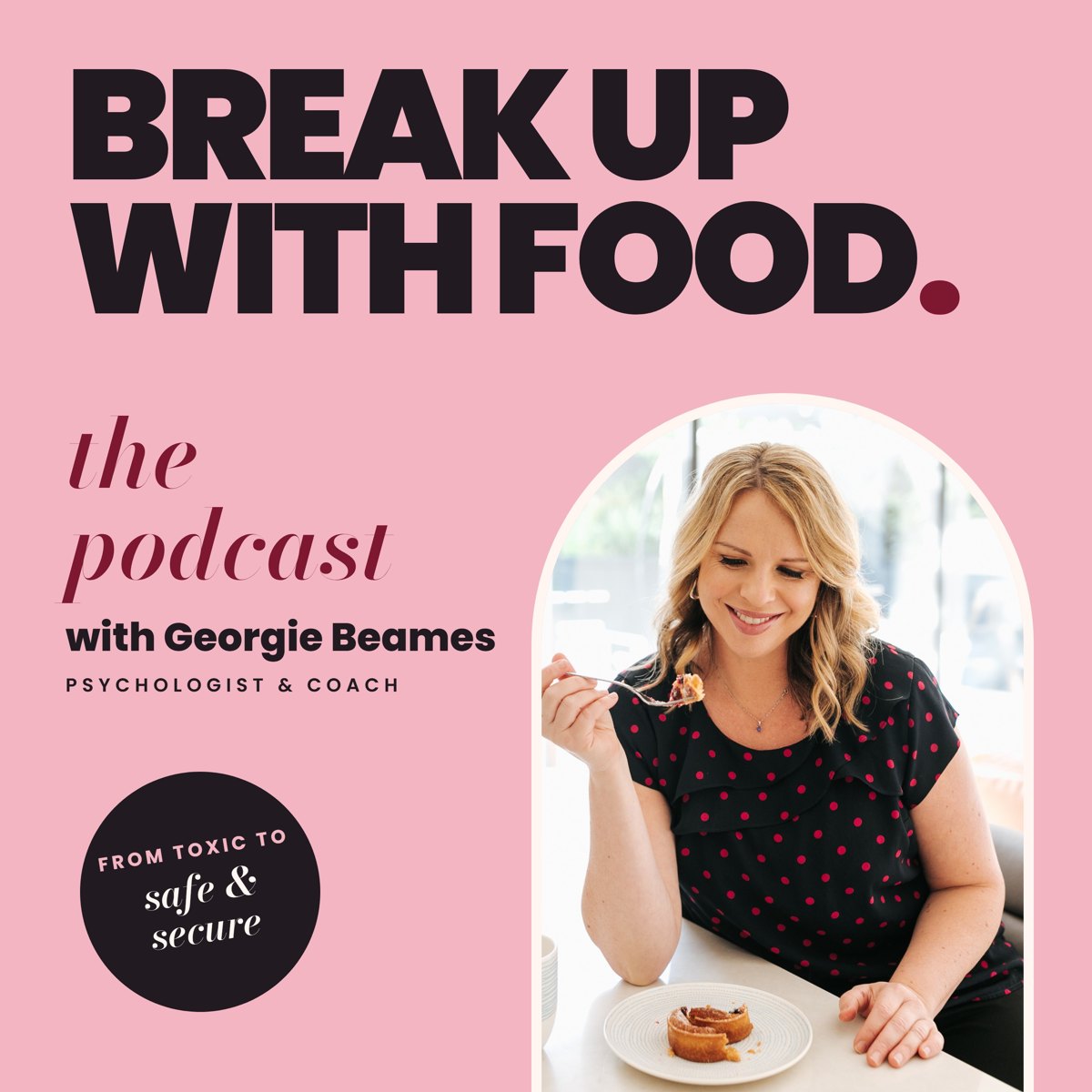
The Break Up With Food podcast goes deeper into food noise, emotional eating and the psychology underneath, one short episode at a time.
Want a printable guide with a 7-day reflection page? Download the PDF.
A note about scope: the Food Relationship Mirror is general education and coaching information. It isn't a psychological assessment, a diagnosis, therapy or personalised medical advice. Your answers are saved only in this browser and are never sent to Georgie or anyone else. If you're worried about an eating disorder, significant distress or your medication, please talk to an appropriately qualified clinician or your prescriber.