
It's time to break up with food.
The old relationship, anyway. Not the food.
The quiz told you who food is in your life. That's the fun part, and it's true. This is the part underneath it. What the pattern is looking for, what your nervous system is doing while it happens, which saboteurs are running the show, and where a calmer relationship with food actually starts.
Four layers. Start at the top and go down.
Who food is in your life.
Food can be comfort, celebration, a break, a reward, or just something to do with your hands. Over years it picks up jobs that have nothing to do with hunger. The six personalities are playful names for those jobs.
The Secret Lover
Exciting, tempting and a little bit sneaky.The eating happens in private. Food gives you a moment away from comments and opinions, and a bit of shame comes along with it.
Your resultThe Loyal Best Friend
Food gives you everything. Asks for nothing.It's there after every hard day. Comfort and familiarity are the pull.
Your resultThe Clingy Ex
Food thoughts and noise that just won't leave you alone.You want to move on, and food keeps turning up in your head anyway. Planning the next meal, negotiating with the pantry at 9pm.
Your resultThe On-Again, Off-Again
Perfect all day, or all week, then it all falls apart.Rules and restraint, then the rebound, then another promise to start fresh on Monday.
Your resultThe Sweet Talker
You earned it. You deserve it. You always do.Food is the prize. It marks the end of a long day, the finished job, the moment you finally get to stop.
Your resultThe Casual Fling
A fun little distraction that never really fills you up.A bit here, a bit there. The grazing gives you something to do, something interesting, a tiny break.
These are descriptions of patterns, not fixed identities. Most women recognise themselves in two or three.
What the pattern is looking for.
The way you relate to food often echoes the way you go looking for comfort, closeness and space everywhere else. Ask yourself this one. When I reach for food and I'm not physically hungry, what am I hoping it will give me?
Food as the one who's always there
Food feels reliable. It never lets you down and it's hard to stop thinking about. What you're really after is reassurance, or some certainty in a day that had none.
Food as a way to switch off
This one is less about wanting food and more about not having to feel something. Food keeps things private and lets you check out for a while.
Food as the one you keep going back to
Strict rules, the fresh start, the reward, the rebellion. You chase it, you push it away, and a few days later you're chasing it again.
Food as one good thing among many
Food is enjoyable and satisfying, and you still have it for pleasure. It just isn't the only way you get comfort, a break or a reward any more.
This is a mirror, not an attachment style test. Hunger, stress, habits, medication, health, culture and what's in the cupboard all shape eating too.
What's happening underneath.
We are a sum of parts. When you eat without physical hunger, a younger part of you has stepped forward with a need, and food is how it knows to ask. The food isn't the problem. It's the hand going up. Which part steps forward depends on one thing more than anything else.
If you don't feel safe in your system, your child parts will run the show.
What I see, over and over, is a woman who starts out wound up. The chatter, the negotiating, the pull towards the pantry. Then she eats, and the eating does more than feed her. It moves her. Out of wound up and into flat. The packet's empty and she couldn't tell you when she opened it. That's why it keeps happening. It works. It gets you out of a state that feels unbearable, and willpower never offered you anywhere else to go.
Each side has its own saboteurs. They're bodyguards, not enemies. Every one of them has a job and a good intention, and a way of doing that job that's costing you. Often it runs in sequence: an anxious saboteur winds you up, food carries you across, and a freeze saboteur takes over on the other side.
The anxious pathway
The freeze pathway
So where is safe?
If you're busy and distracted, that's not safe. That's anxious. If you're in a bubble eating and watching TV or scrolling, it's most likely freeze. Safe is neither of those. Most of us bounce between the two for years and call both of them relaxing, so safe is something we have to learn what it feels like. It's a skill nobody taught you, not a test you're failing.
Your personality and your saboteurs don't line up one to one. A Loyal Best Friend might run on the Distractor, the Numbing Out Saboteur, or both. The saboteurs are a way to reflect, not a diagnosis.
Every pattern has a payoff.
Next time it happens, see if you can catch the steps. The payoff is the clue. It tells you what that part of you is trying to do for you.
- Something sets it off
- A feeling or a thought
- The urge
- Eating
- The payoff right now
- What it costs you later
How the relationship changes.
Understanding your pattern helps, but insight on its own rarely changes something this automatic. You can't think your way into feeling safe. The goal isn't never eating for pleasure again. It's more room to choose.
Regulate
Notice your state first. Busy and wired, flat and switched off, or somewhere in between? Then pause. A long slow breath out, your feet on the floor, whatever already helps you settle. You don't have to force the urge away. You're just giving your adult a chance to get back in the room.
Rewire
Ask that part of you, "What do you need right now?" Then practise meeting that need in more than one way. Rest. A person. A proper break. Something interesting to do. Food, eaten on purpose and actually enjoyed, is allowed to be one of the answers.
A gentle 7-day reflection
Once a day for a week, jot down:
- When did the urge show up?
- What was happening just before?
- What did food promise me?
- What else might have helped?
No scoring yourself as good or bad. You're collecting clues.
Keep the mirror
Download the PDF guide to save on your phone, print out, or come back to when the 9pm pantry negotiation starts.
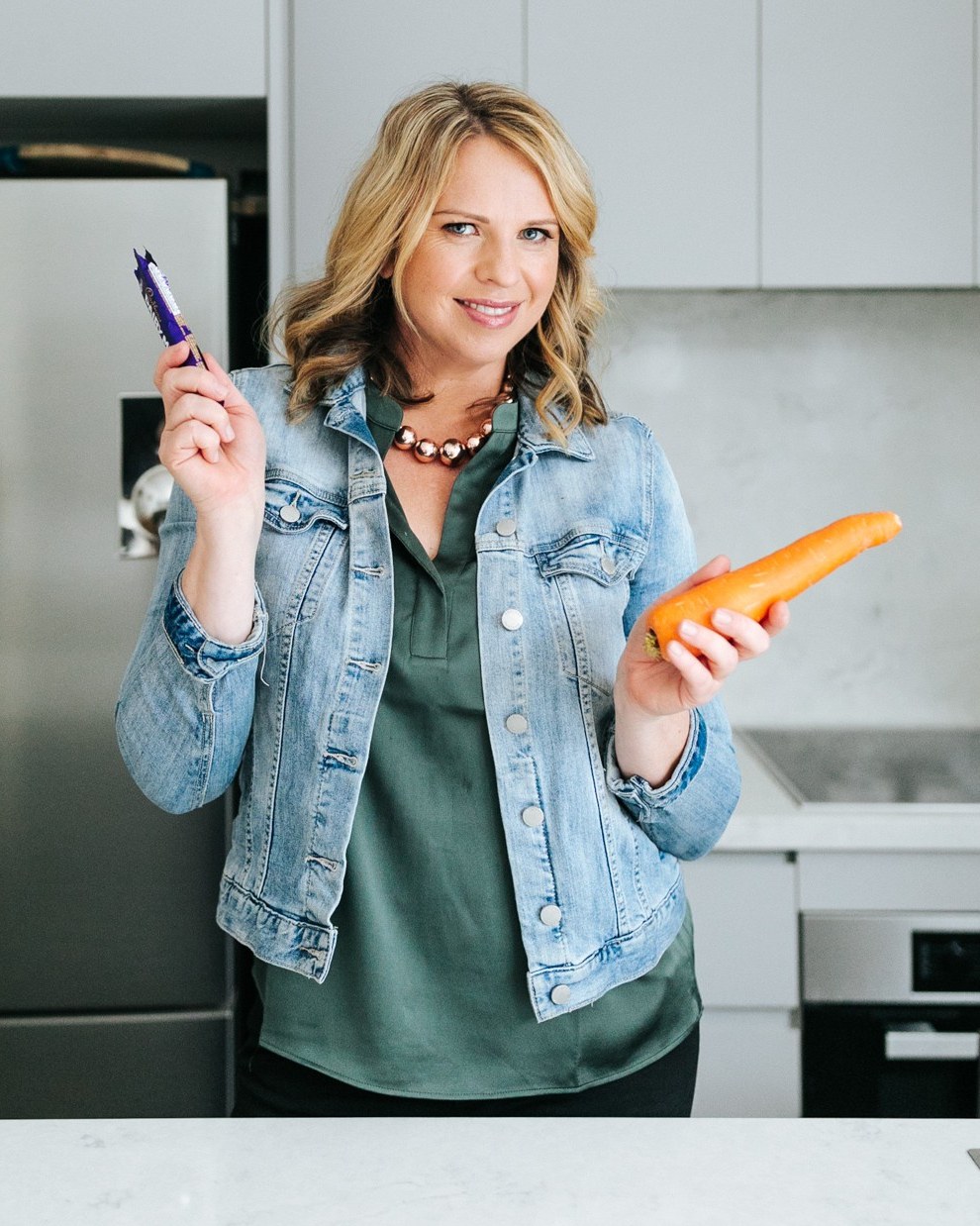
Book a Break Up Session with Georgie.
The mirror is general. A Break Up Session is about you. In 30 minutes online we look at your exact patterns, which saboteurs are doing the heavy lifting, and what's underneath them. You leave with your personalised Eating Patterns Plan and your own Break Up Script, made with my Brain Rewiring Tool.
$397 AUD$297 + GST approx. US$195 / £150
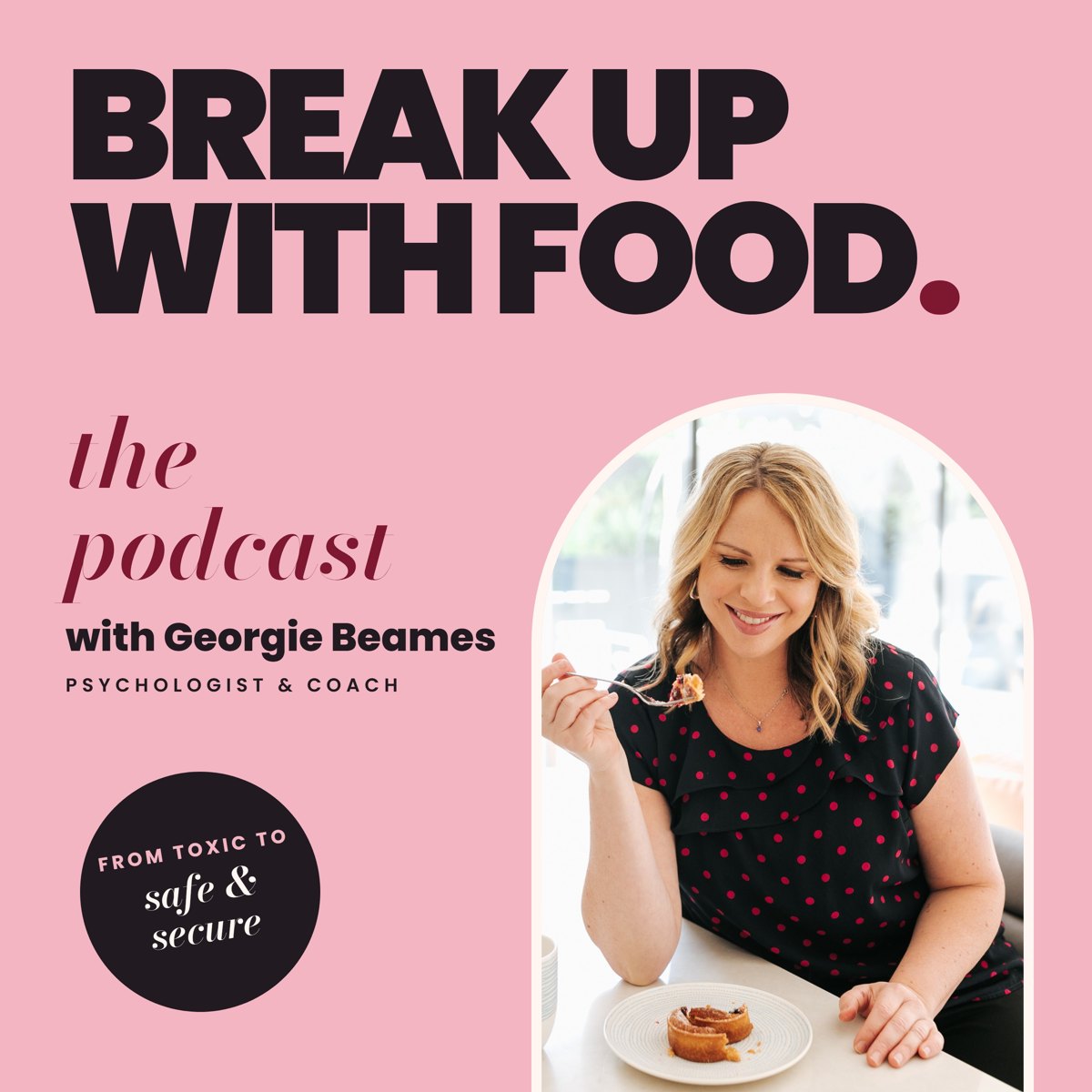
The Break Up With Food podcast goes deeper into food noise, emotional eating and the psychology underneath, one short episode at a time.
A note about scope: the Food Relationship Mirror is general education and coaching information. It isn't a psychological assessment, a diagnosis, therapy or personalised medical advice. If you're worried about an eating disorder, significant distress or your medication, please talk to an appropriately qualified clinician or your prescriber.